

Statement: ICE kidnapping at Linda Vista Elementary

Yesterday afternoon, near Linda Vista Elementary School, a parent was detained and kidnapped by ICE while waiting to pick up their child from school.
SDEA members have worked hard to ensure that District leadership prioritizes protecting our communities, and we urge them to continue speaking out and providing valuable resources.
We also know that we can’t stop at policies on paper and a shared commitment to keep ICE off campus. As educators, we know that what happens off campus impacts our school communities, too. As union educators we know that we have the power to fight for what matters to us: Safe, stable, welcoming schools and communities, both within and outside the school doors.
Our power is in our solidarity. We need to get organized! We’ve seen educators and communities in Los Angeles stand up to ICE raids, and we must be ready to do the same in San Diego, especially with a federal administration that prioritizes immigration enforcement over community care.
Next week, SDEA members will join labor and community allies for a Nonviolent Direct Action Training to prepare for future raids. We are not alone, and we cannot afford to be bystanders. An Injury to One is An Injury to All!
In solidarity,
Kyle Weinberg
SDEA President

Nonviolent Direct Action Training
San Diego and Imperial Counties Labor Council and UCSD’s Labor Center (along with a variety of other community organizations) are holding a Nonviolent Direct Action Training, to train our local community how to to prepare our local community to organize against raids and protect each other.
- Nonviolent Direct Action Training
- 🗓️ August 19
- ⏰ 5:30 pm – 8:30 pm
- 📍 San Diego Convention Center
- 🔗 RSVP to attend: bit.ly/aug19trainingrsvp (Register by August 15!)


Letters in Solidarity: Paid Special Education Credential Pathway to Fully Staff Schools
Paid Special Education Credential Pathway to Fully Staff Schools
We hope that everyone is making the most of your well-deserved break as we all recharge and prepare to ramp up our contract campaign next school year. The overarching demand in our bargaining platform is fully-staffed, stable and inclusive schools and through our collective organizing efforts last school year, we elevated the ongoing special education vacancies in our district as a key issue that we must tackle together.
The special education staffing crisis impacts our vulnerable students with disabilities by depriving them of educators who can provide targeted support to meet their individual needs. It’s also a problem we will continue to face moving forward: Like other districts throughout the country, our number of new teachers in special education credential programs has not recovered to what it was before the pandemic.
In January, SDEA union educators from throughout the district rallied at the board meeting at the Ed Center to highlight the lack of progress on implementing concrete solutions to staff vacant special education positions. In March, we proposed a package of improvements to fully staff special education as part of our We Can’t Wait contract campaign demands:
- $4000 yearly stipend for education specialists
- Monthly stipend for special education teachers over contractual caseload caps
- A monthly case management day where education specialists are released from instruction by a visiting teacher
- A pathway for educators to add a Special Education credential paid for by the District, to help fill vacancies
SDEA special education leaders who have absorbed month after month of caseload overages also recently met with all five of the SDUSD board members to convey our urgency to explore all possible solutions to fill special education vacancies and get our highest need students the supports they deserve. While this resulted in some progress and got us closer to resolving the unionwide grievance related to exceeding contractual contract caps from last school year and the previous one, we know that this is a band-aid that doesn’t address the larger problem of the ongoing staffing crisis.
As part of our agreement with the District to offset retirements from the Supplemental Early Retirement Plan (SERP), the District has already agreed to pay for SDEA bargaining unit members, including those on temporary contracts, early childhood educators and visiting teachers, to add a Special Education credential in exchange for committing to work in a Special Education vacancy. For those who have already enrolled in a program or who are interested in participating, make sure to fill out the District’s interest form by June 30, 2025 (Note: You will need to be logged into your District email). Check out the SDEA Special Education Credential Pathway hub for extensive answers to Frequently Asked Questions and other resources.


SDEA History Corner: Rooted In Solidarity
by Gail Boyle, President of SDEA-Retired
This is Part 2 of our SDEA History Series. See Part 1 here!
San Diego’s first strike wasn’t teachers, it was San Diego High School students.
Think of the requirements for dismissal today: Just cause, with significant documentation and a right to representation. That is because we have a contract and a union. Not so in 1918. On June 4, 1918, a list was issued of 18 teachers at San Diego High who were being dropped from employment. No reason was given, just a notice that their services would not be required next year.
This was big news in San Diego! It attracted much furor. For 18 consecutive days, the three newspapers dedicated a total of 125 columns to a discussion of the situation and demanded a reason. The Board of Education sent the papers a shocking and libelous statement that the teachers were disloyal to their country. The students of San Diego High, through their elected ASB, demanded a better explanation.
The San Diego High ASB Executive Committee subsequently notified the student bodies of the high school and the junior college that there would be a meeting in the stadium during lunch on June 6th. The meeting of 1800 students was orderly and lasted 1 hour, forty-five minutes. They passed a resolution: “Resolved that the student bodies of the San Diego High School and Junior College leave, and not return to school until the Board of Education has given satisfactory reasons, other than political, for the dismissal of several teachers, and furthermore, that they offer to reinstate all who are not proven inefficient.”

Photo from San Diego History Center
The School Board called the police headquarters to report a riot. Police rushed to the school, but finding neither a riot, nor anyone trying to produce one, left. One newspaper headline says how many students were attending school: “EXTRA! FIVE PEOPLE GOING TO HIGH SCHOOL!” The District was losing $600-$700 daily from ADA funds, as nearly all students refused to attend.
The San Diego Chamber of Commerce and the Rotary Club started a recall petition of the “Solid Three” board members. Other civic organizations, including the PTA, joined the recall effort in support of the students. The students boldly called for a mass meeting of the community at Balboa Stadium, inviting the School Board to join them. The Board sent a message back saying that they had “executive business” and respectfully declined, but the community attended.
The School Board decided it would withhold diplomas to all the seniors, an action blocked by the District Attorney because the teachers and principal had already passed the students. A motion that the School Board reinstate the dismissed teachers was greeted by a response from one board member that she was “too busy with other things...”
Finally, the Board responded with a reason: “Again, the question of whether we should have in our schools teachers who are absolutely and unqualifiedly loyal to our government and our institutions and 100% American is not a debatable question…several among those dropped were under surveillance by the authorities for pro-Germanism and these teachers were dropped for that reason.” Except, the San Diego Union editor was told by the Bureau of Investigation, Department of Justice, that no teachers on the list had ever been investigated. The dismissed teachers sued the School Board for libel. Ultimately, the teachers were offered reinstatement. Some returned, one a familiar name: Elizabeth Freese, who a San Diego school is now named after. Many of the teachers decided there were better places to work.
A group of teachers met at a home, 4277 Jackdaw Street, to discuss the formation of a permanent professional organization. Teachers were backed by the president of the Normal School, E.L. Hardy, who issued a public statement that the interests of teachers would never be protected until they had a professional organization. Today the Normal School is known as San Diego State University, Hardy Elementary is named after E.L. Hardy, and through an amazing coincidence, that same home on Jackdaw was later the home of Hugh Boyle, the President of SDTA during the first teacher strike in 1977.
The new professional organization was put into place for the 1918-1919 school year, modeled after the Los Angeles Teachers Club and Minneapolis Teachers Association, set its goal: “to form a teachers association which shall have for its aims the development of the teaching profession in San Diego, and eventually throughout the State of California, on the basis of professionality and legal status that shall clearly define and establish the relations of teachers to one another, to superior officers and governing boards and to the community.”
Starting a union was an important first step, but it certainly wasn’t the last. Learn more in our next History Corner!

Housing Justice & Stability for All
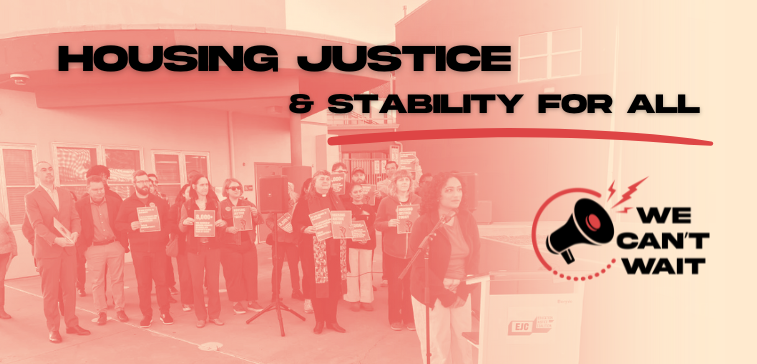
Housing isn’t just a hot topic of conversation here in San Diego. It’s an urgent public education issue! As the cost of living continues to soar, educators and the communities we serve are being priced out of San Diego. SDEA members are fighting back, not only for higher wages, but for systemic solutions that allow educators, students, and families to stay, live, and thrive in their communities.
Housing justice for educators & communities
In recent years, San Diego Unified has seen significant drops in enrollment (and corresponding funding), in part because many families can’t afford the cost of living in San Diego. Educators are struggling to stay, too. Across California, housing costs continue rising, while educator pay remains stagnant. CTA recently published educator pay reports highlighting the deep impact of chronic underfunding in public education. Turnover and long commutes undermine stable classrooms and student learning. Improving educator pay is a key pillar of our statewide fight to increase funding for public education, but it’s only one piece of a larger fight for housing justice.
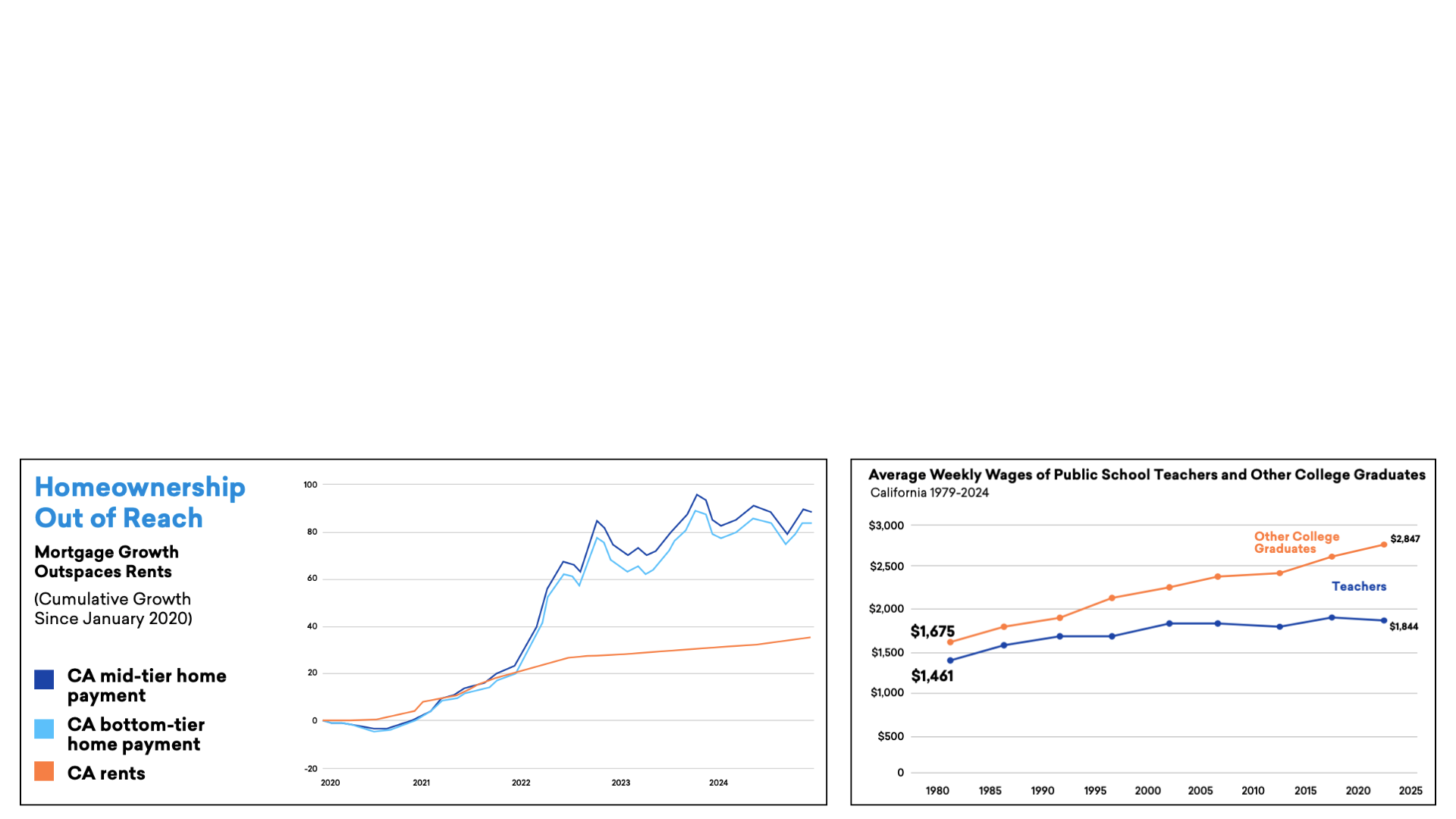
Charts from this fact sheet about educator pay in California.
Common Good Bargaining: Going beyond the basics
By law, the District must negotiate with union educators over wages, benefits, and working conditions. At SDEA, we haven’t stopped at the bare minimum. SDEA has a proud history of also fighting for issues that affect our broader school communities, like housing, public health, and racial justice. Our success in “Common Good” bargaining is a sign of our collective power, and our communities need that power now more than ever.
What we've won, and what comes next
In Spring of 2024, SDEA secured a Housing Supports Agreement with the District that included:
- Workforce housing funded by Measure U, which has provided some members the chance to live near where they teach.
- Safe sleeping sites on District properties, for unhoused students and their families. The City of San Diego has stalled on its end of the agreement, but SDEA members and community partners from the Education Justice Coalition kept up the pressure. Even this bare-minimum solution (using an empty parking lot) still has not come to fruition. As of June 2025, the City has put the safe sleeping site in their modified budget and it may finally happen.
In response to ongoing advocacy, the SDUSD Board recently approved plans to build more than 1,500 affordable housing units on district-owned land. SDEA’s Housing Committee is pushing the District to go even further: Waiving application fees, prioritizing educators experiencing housing insecurity, and and providing mixed-income housing that reflects the diversity of our school communities. Without intentional efforts to address systemic inequalities, housing solutions will perpetuate housing insecurity in our communities.
Housing + Education = A statewide conversation
San Diego’s housing crisis isn’t unique. Across California, union educators are organizing around housing and finding creative solutions using District resources. Recent studies and statewide initiatives highlight the underutilized properties owned by districts across California, and more Districts could be collaborating on workforce housing. We’ll need to continue leveraging our collective power at the bargaining table and through pressure on elected officials at every level, to ensure that every available resource is used to meet our shared needs. We Can’t Wait!

Paloma Aguirre for Supervisor!

San Diego County Needs Labor-Friendly Leadership!
The special election for San Diego County Supervisor, District 1, is upon us, and the stakes couldn’t be higher! SDEA has proudly endorsed Paloma Aguirre, a proven advocate for working families, public education, and community justice. This election will fill the seat formerly held by Nora Vargas and will significantly impact the balance of power on the Board, so whether or not you’ll be voting in this election, you can play a part in building collective power at the county level.
Will you vote? Or get out the vote?
- Everyone: Join a United Union Walk on an upcoming weekend, at locations throughout the county!
- Live in District 1? Ballots were mailed earlier in June, and early voting starts on June 21. Vote by July 1!
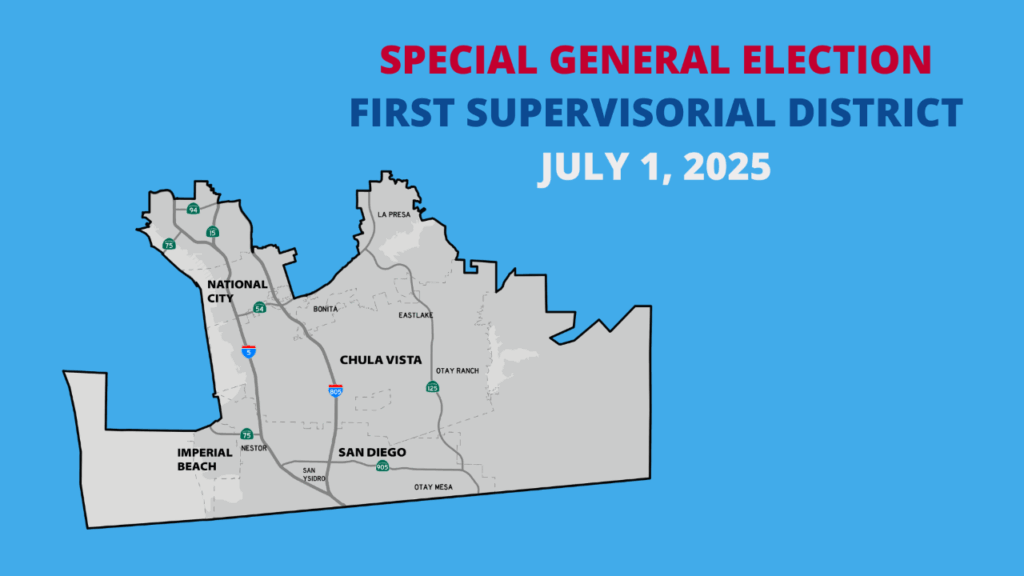
Need more detailed election information? Go to SDVote.com!
Why Paloma Aguirre?
We need leaders who show up for our communities, take on the tough fights, and deliver real results. Paloma Aguirre is that kind of leader. She’s tackled the issues others avoid, and she’s made change happen:
- Addressing the sewage crisis
- Standing up to rent gouging
- Fighting crime in our neighborhoods
- Holding utility companies accountable
Paloma doesn’t just talk: She gets things done!
Learn more: www.paloma-aguirre.com
What Does a County Supervisor Do?
The role of a County Supervisor is one of the most powerful and wide-reaching in local government. In San Diego County, supervisors:
- Set policy and pass laws, especially in unincorporated areas
- Oversee an $8.5 billion county budget
- Administer critical programs like Medi-Cal, CalFresh, and foster care
- Ensure public health and safety, including emergency services and inspections
- Serve as liaisons for community concerns and county services
This position directly impacts how resources are distributed, how services are delivered, and how responsive the government is to working people.
Who else has endorsed Paloma?
Along with an endorsement by SDEA, Paloma’s campaign is backed by a broad coalition of labor, environmental, civil rights, and political organizations, including:
- San Diego County Democratic Party
- California Democratic Party
- San Diego-Imperial Counties Labor Council
- SEIU Local 221
- IBEW Local 569
- Equality California
- LGBTQ+ Victory Fund
- Sierra Club
- San Diego Union-Tribune
- & more!


SDEA 2025 Scholarship Recipients

Congratulations to all the recipients of SDEA’s 2025 scholarships!









SDEA offers scholarship opportunities for members and members' dependents each year. You can read more about the process the SDEA Scholarship Committee uses to award scholarships in the April 2025 issue of The Advocate. Learn more about how to contribute on the SDEA Scholarships page.
Your Voice Matters! Join an NEA DRI Discussion and receive $75!
Sent on behalf of CTA's San Diego Service Center Council - Human Rights Committee:
If you have participated in a DRI activity this year or identify as disabled, sign up for a group meetup on Wednesday, June 18th at 3:30 PM (PST) or Monday, July 7th at 3:30 PM (PST) via this Calendly Link and receive a $75 gift card!
If you have already joined a focus group and received the $75 gift card, please share your individual story at the NEA DRI Survey or via a self-directed interview. Self-directed interviews submitted in writing or recording will be entered in a drawing to win a $50 or $75 gift card. Email hallo@asevaluation.com to sign up.
Click the image to access the flyer:

Interested in adding a free Special Education credential?
As part of our agreement with the District on a Supplemental Early Retirement Plan (SERP) in 2024-25, the District has agreed to pay for SDEA members to add a Special Education credential in exchange for working in a Special Education vacancy. For those who have already enrolled in a program or who are interested in participating, make sure to fill out the SDUSD SpEd Staffing Opportunity – Interest Form by June 30, 2025 to reserve your spot. (Note: You will need to be logged into your District email)
See more information & an updated FAQ on our information hub:
https://www.sdea.net/spedpath25/
Advocating for TK
Advocating for TK: Time to take it up the ladder!
San Diego Unified isn’t doing the right thing when it comes to our youngest learners or the educators who serve them. We’re taking it up the ladder by inviting Supt. Fabiola Bagula to meet with delegations of TK teachers and supporters!
We’ll invite Supt. Bagula to meet with SDEA members who will explain that we need SDUSD to:
- Agree to SDEA members’ bargaining proposal for a toileting policy that doesn’t force TK teachers to stop instruction to change soiled diapers or deal with accidents, and
- Agree to SDEA members’ bargaining proposal to continue the ECE Teacher stipend indefinitely, instead of cutting the pay of some of our lowest-paid educators.
Do you teach TK or are you an ally of TK teachers? Are you interested in joining the delegation to advocate for commonsense solutions on TK toileting policy and ECE Teacher pay? Tell us you’re interested so we can be in touch over the summer!
More assessments required = More time needed
Toileting policies aren’t the only changes impacting educators. With the rollout of Universal Pre-Kindergarten in California, expanding public education access means expanding educator responsibilities. Assessments like the DRDP are important tools, but they are time consuming. SDEA members have requested to bargain over the impact on educators administering this test, have proposed related protections for our next contract. (For example, proposed changes to Article 8.) With no response yet from the District, it’s crucial to stay connected with colleagues and site reps about how changes affect your time and your students.