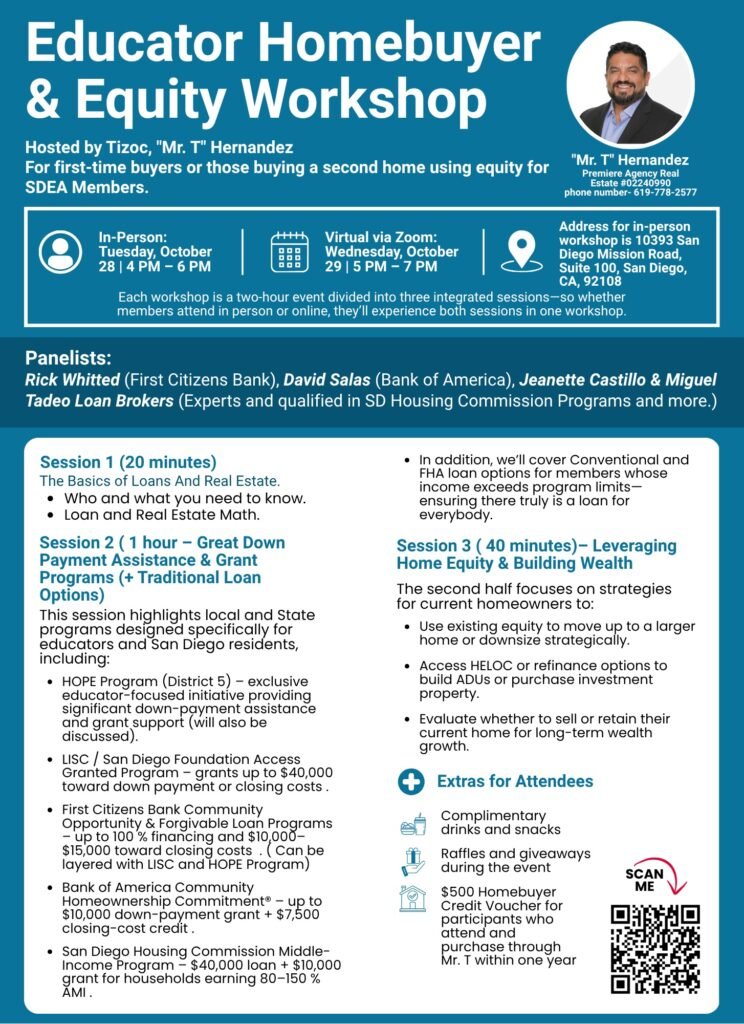

Get Your Union Hoodies & Hats!
SDEA hoodies and hats are available to purchase for a limited time only!
Order online by Dec 10, 2025 so your site reps can pick up at the Jan 2025 Rep Council!



Know Your Rights: Restorative Justice, Student Discipline, & Shared Decision Making

Reminder: Safety Plans & Discipline Plans
Your union contract includes the right to safe employment conditions, and that includes the right to a Site Restorative Discipline Plan developed with the SGT, aligned with District Policy, and reviewed annually. (11.7.1.)
Read more in these Know Your Rights flyers:
- Know Your Rights: Restorative Justice
- Know Your Rights: Shared Decision Making
- Know Your Rights: Student Discipline
Does your site need support in developing a Site Restorative Discipline Plan?
SDEA leaders are collaborating with SDEA members from the Restorative Justice Practices Department to lead skillshare sessions for any members who need advice on how to effectively develop a Site Restorative Discipline Plan with their Site Governance Team (SGT). This includes sites that don’t currently have a functional SGT, and includes insight on the District’s Restorative Discipline Policy which was updated over the summer.
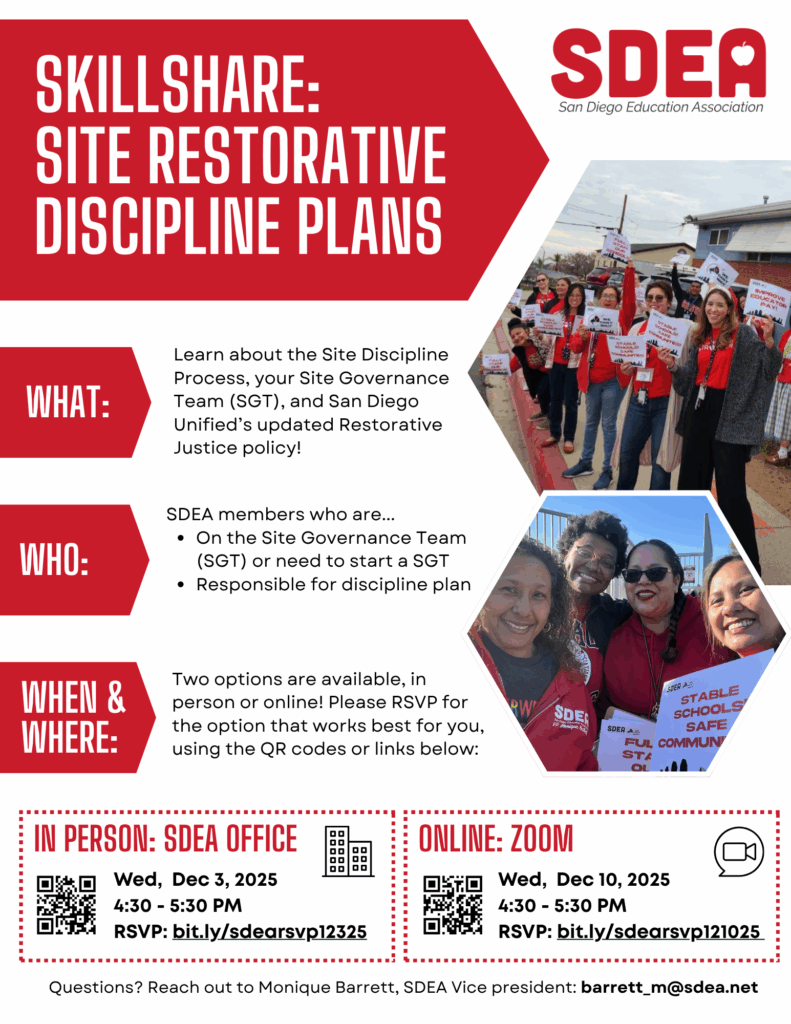
Sign up for one of two options:
????In person at the SDEA office - RSVP
Wed, Dec 3, 2025, 4:30 - 5:30 PM
???? Virtual via Zoom - RSVP
Wed, Dec 10, 2025, 4:30 - 5:30 PM
See more Know Your Rights flyers and resources here!
Bargaining Update - November 6

Yesterday was the eighth bargaining session between SDEA and San Diego Unified. You might be double checking the date, because it feels like you’ve read this update before: Still no proposals on anything with a significant price tag. There were ongoing discussions on some of the same articles as last time. At this point in bargaining it’s normal to have a lot of back and forth on the details of contract language - that’s the nature of negotiations. However, our progress is certainly slowed down by the fact that the District still has not provided any proposals on our “big ticket items”: Special Education staffing and supports, wages, ending Fall excessing, expanding mental health supports, or even extending the ECE TK co-teacher stipend.

Once again, the District brought no counters related to pay. We did, however, come to a tentative agreement on Article 34, which is a shared commitment to advocate for more funding for our schools. The reality is that while SDEA educators will need to urge the District to responsibly spend every available dollar on the resources our students need, we all need to advocate together at every level to improve the abysmal funding for public schools in the wealthiest state in the US. Read the full Tentative Agreement on Article 34: Revenue for Public Education

While we’re still inching forward on air filtration and other repair issues, we’ve made significant progress on Community Schools, and we’re establishing structures to ensure that educators have a voice in improving our evaluations process.
Article 11: Safety Conditions of Employment
We again urged the District to prioritize classroom air filtration, reintroducing our previous proposal based on professional standards originally suggested by the District. We also discussed improving the process of requesting repairs by setting clear timelines. Our proposal would allow site-level fixes when possible and escalating to central PPO when needed. This would speed up responses to educator concerns and reduce the current bottleneck caused by routing all concerns directly to a central department. Read all of SDEA’s proposed changes to Article 11: Safety Conditions of Employment.
Article 14 and 18: Evaluations and Support
Our proposals for Articles 14 and 18 leave the current contract language as is, but clarifies the introduction:
- Referring to the current agreement on evaluations in the 2025-26 and 2026-27 school years.
- Giving authority to a Joint Evaluation Committee to amend that agreement next school year if needed.
While both SDEA educators and administrators are motivated to improve our evaluations process, our priority is always ensuring that evaluations are used to support educators, not punish them. Read all SDEA’s proposed changes to Article 14: Performance Evaluation Procedures and Article 18 Peer Review & Enrichment Program (PREP). Make sure you’ve also checked out the current information about evaluations (including a summary and FAQ.)
Article 36: Community Schools
We are very close to an agreement that empowers Site Governance Teams at Community Schools and supports sustainability for this critical equity strategy that we fought for and won as union educators together with families and community allies! Read all of the District’s proposed changes to Article 36: Community Schools.

Most of our staffing discussion yesterday was focused on Summer School, along with two additional proposals that had minor adjustments:
Article 17: Summer School/Intersession Hours & Conditions of Employment
We’ve made some movement toward a more fair system of staffing Summer School, balancing the needs of individual sites and programs with the rights of SDEA members interested in this opportunity. The District’s proposal yesterday would reduce opportunities to teach summer school unless it is hosted at your school site, which is not fair for educators at sites that never host. This means we can’t accept this proposal as is and we’ll be countering it. Read all the District’s proposed changes to Article 17: Summer School/Intersession Hours & Conditions of Employment.
Article 5: Employee Organizational Rights
The District proposed a minor update to New Hire Orientation. Read all the District’s proposed changes to Article 5: Employee Organizational Rights.
Article 31: Reduced Workload
We accepted the majority of the District’s last proposal, with minor adjustments. Read all of SDEA’s proposed changes to Article 31: Reduced Workload.
What's next?
Our next scheduled bargaining date is December 4, 2025. The District has yet to meaningfully respond to our proposals on wages, mental health supports, or fair compensation for our lowest-paid educators, but we’ll continue to show up and demand a contract that addresses the glaring needs in our district.
We need our 6000+ SDEA union educators to stay ready, so we don’t have to get ready! We need to keep up the momentum we’ve built so the District knows that our needs are urgent and that we’re serious about our demands… and so we can accelerate if needed. We Can’t Wait!
Stay informed:
Even through all the details of bargaining, we can stay focused on our demands for a new contract that ensures fully staffed schools, improved educator pay, and stability for our students and communities. Keep track of all proposals so far here, and access full campaign information here.
In Solidarity,
SDEA’s Bargaining Team
Kyle Weinberg, SDEA President, Ed. Specialist: Mild/Moderate, English and History Teacher; Laurie Bailon, Restorative Justice Teacher, Bell MS; Carly Bresee, Ed. Specialist: Moderate/Severe, Lafayette ES, Sarah Darr, SDEA Secretary, WCW Campaign Organizer & SLP; Christina Gallegos, ECSE Teacher, Rodriguez ES; Candace Gyure, School Nurse; Stacy Hernandez, SDEA Bargaining Chair & 2nd Grade Teacher, Dailard El.; Andrew Melia, School Psychologist, Riley School; Elizabeth Miller, Ed. Specialist: Mild/Moderate, Lewis MS; Eri Nall, Head Counselor; Kiki Ochoa, History and Ethnic Studies Lead Teacher, Lincoln HS; Lori Schmersal, PE Teacher & Coach, Clairemont HS; plus SDEA staff Anthony Saavedra, Executive Director, Sara Holerud, Organizer, and Rafal Dobrowolski, Contract Specialist
Your Upcoming Strike Vote!
When it comes to Special Education staffing, we’ve tried everything.
For years, SDEA union educators have done everything possible to push the District to provide our students with disabilities with the support they need. We’ve filed multiple grievances to enforce our contract language, proposed improvements to our contract, rallied at Board meetings, met with Board trustees, and organized alongside families, classified colleagues, and community members. We’ve even bargained for a free credential pathway which helped fill dozens of SpEd vacancies. The core problem remains: Grievances from the last two school years remain unresolved, the District continues to violate our contract, and Special Education remains understaffed. While educators continue to advocate for practical, student-centered solutions, the District continues to violate our contract, labor law, and the rights of our students who deserve more.
SpEd staffing isn’t the only thing we are fighting for, but it’s something urgent for all of us.
When students don’t have enough support, we all feel the impact: Overwhelmed students, burned-out educators, escalating behavior issues, and unsafe conditions in classrooms.
What will convince District leadership to share our urgency? Escalating actions develop our organizing muscles, showing everyone (our fellow members, our school communities, our bosses) that we are getting stronger and we are ready to use that strength to fight for what matters to us: high-quality public education for ALL students.
Strike Readiness is our peak power as a union. Are you ready to use that power?
Strike readiness is the highest level of collective power, and it’s not a step to be taken lightly. It’s time for us to decide: Do we use our power to fight for what our students need?
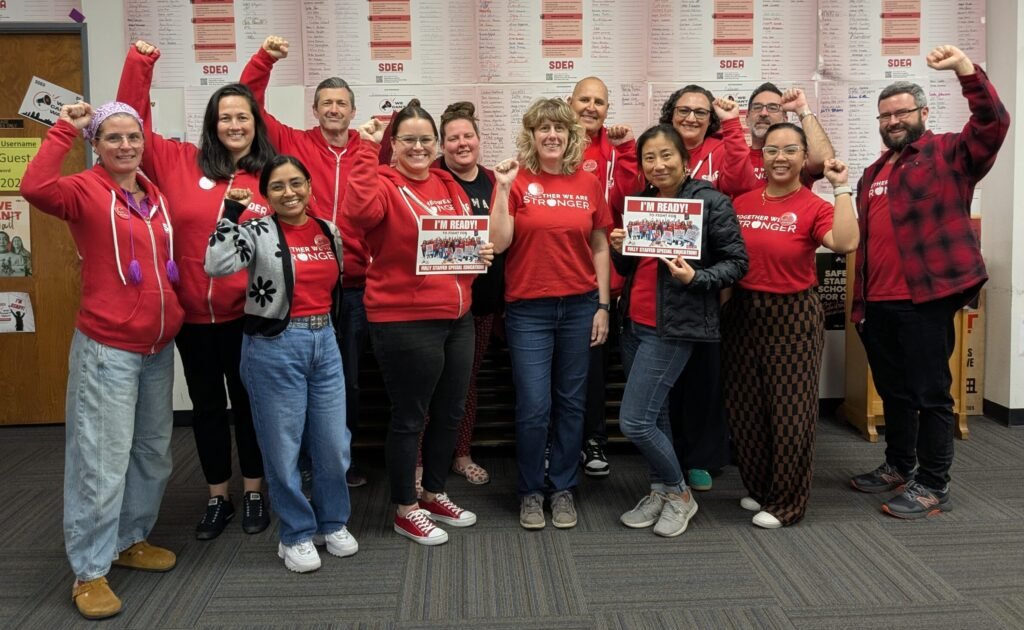
In October, we put up “I’m Ready” signs in thousands of classrooms all over the district, committing to vote YES on a one-day strike to defend our contract and stand up to the district’s repeated violations of Special Education Staffing.
This week, SDEA site representatives received materials to hold an official strike vote at your next union meeting in November or December. Every SDEA member will have a chance to participate in this democratic process.
Your voice matters!
Even striking for one day is a big decision that impacts all of us… because it addresses issues that also impact all of us. Your ballot will ask whether to authorize the SDEA Board of Directors to call a one-day unfair labor practice strike in February if the District continues to violate our union contract by understaffing Special Education.
We haven’t faced a possible strike in our district in decades, so it’s natural to have questions and uncertainty. We can answer those questions together: Your rep has additional information and FAQs to share. Attend your union meeting, ask questions, discuss with your colleagues, and decide: Are you ready to take action? Are you ready to stand up with your colleagues? Are you ready to say: We Can’t Wait!?
Voting is happening at schools, worksites, and the SDEA union hall from Nov. 6 to Dec. 16. Your site or program’s voting window may be shorter. If you aren’t sure who your union rep is, reach out to the SDEA office!
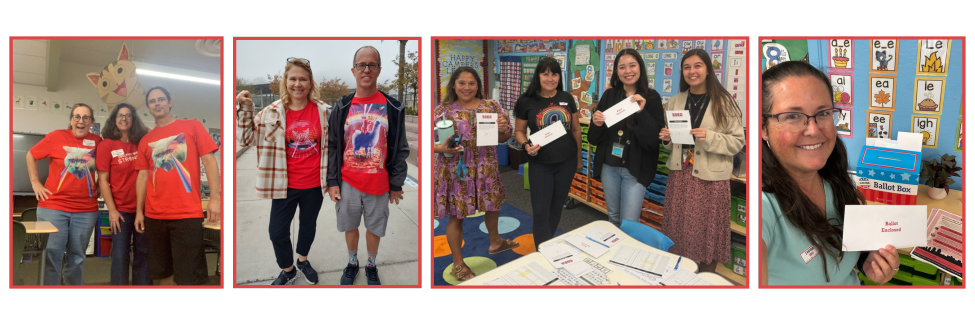
At Henry HS and Ocean Beach ES, union reps and Contract Action Teams (or CATs!) are ready to make sure every member gets a chance to vote!
2025 Toy Drive
CTA San Diego County Service Center Council is holding a Toy Drive for Labor Council's annual event for San Diego families!
- Submit a name: If you or another educator you know needs support this holiday season, you can submit a name for a food and/or toy voucher here (we have limited numbers!) by Wednesday, December 3rd at the latest. (Educators, we know you normally focus on your students and their needs, but these vouchers are for SDEA members and their families.)
- Donate a toy: Drop off unwrapped toys at the SDEA office by Friday, December 5th. Normal business hours are Monday – Friday from 8 a.m. – 5 p.m. (Note: In observance of Thanksgiving, SDEA will be closed November 27 – 28, 2025.)
Click here to download a PDF version of the flyer!

REAC Celebrates Native Culture: Nov 15
CTA's San Diego County REAC (Racial and Ethnic Affairs Committee) is composed of educators from African American, American Indian / Alaska Native, El Sol (Mexican, Hispanic, Latina/o/x, Chicana/o/x) and Asian and Pacific Islander communities.
In honor of Indigenous People's / Native American Heritage Month, REAC is hosting an event for educators to learn and grow in their understanding of histories as we network, share stories and build solidarity on November 15th (Saturday) from 11am - 1:00pm at the Americas Museum at Cuyamaca College. RSVPs are due November 13th, 2025. RSVP here or by scanning the code in the image below.


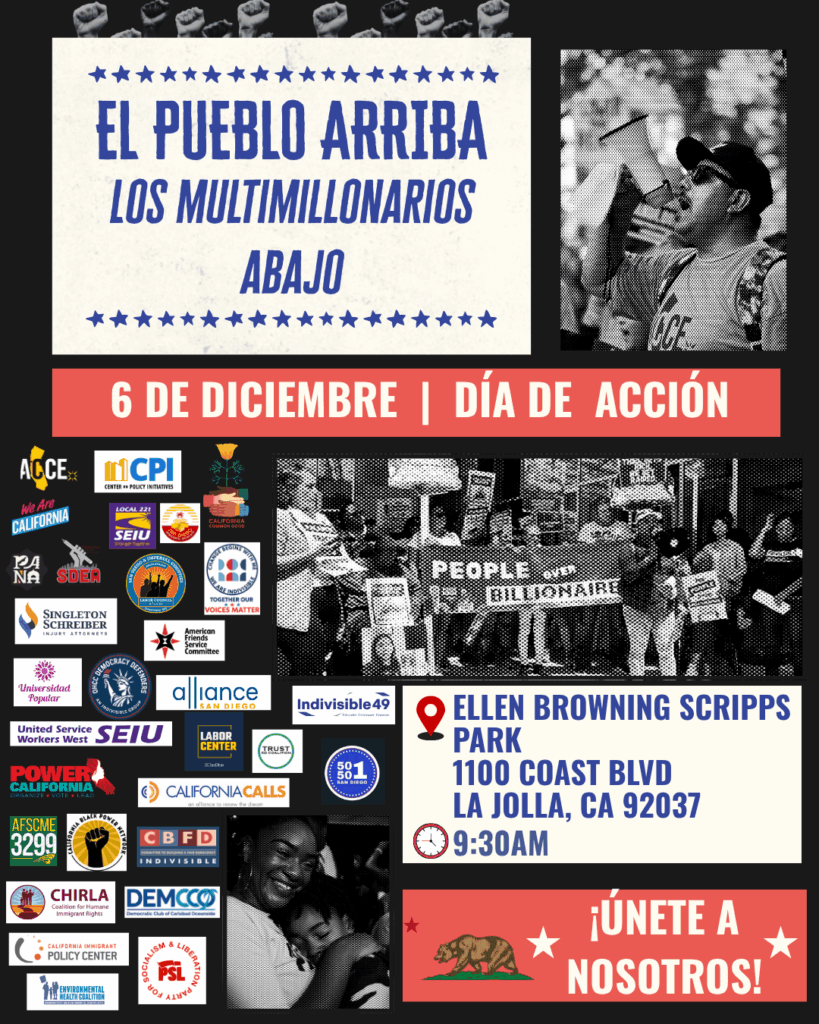
People Over Billionaires: Dec 6!
People Over Billionaires Action, Saturday, December 6, 9:30 am in La Jolla
We’re uniting - labor and community - to push back against the authoritarian attacks on our students and families and fight for a vision and agenda that puts people first. We reject the scapegoating and divisions that attempt to divide us. Some very powerful corporate billionaires are supporting and enabling these attacks and advancing a “billionaires first” agenda that allows the rich to become richer while the rest of us struggle to make ends meet. We need to take the fight to them. Join us on Saturday, December 6, at 9:30 am at Ellen Browning Scripps Park in La Jolla!
RSVP & see more information here!
*This action is organized by our community partners at ACCE! (Originally planned for Nov 15, it was postponed due to rain.)



Bargaining Update - October 23
Yesterday was the seventh bargaining session between SDEA and San Diego Unified. We made progress on some details of our next contract, but an ongoing lack of response to anything with a price tag means that movement has been gradual on the issues that SDEA members are feeling most urgently.
Yesterday we continued our discussion from last session about how safe school facilities and effective Community Schools can support our students and communities, and what an improved evaluation process would look like in our next contract.
Article 36: Community Schools
SDEA presented a counterproposal to continue clarifying improvements to our Community Schools model. The District’s last proposal established continued staffing for Community Schools, so our proposal seeks to refine Community Schools’ ability to meet community needs by giving SGTs oversight over any available funds and more of a role in the recruitment and recommendation of site coaches. Read all SDEA’s proposed changes to Article 36: Community Schools.
Articles 14 & 18: Evaluations
The District presented counterproposals to Article 14 & 18, which propose details aligned with the MOUs that SDEA members recently ratified on evaluations and supports for educators. This is an ongoing effort to improve the evaluation process. Read the Educator Evaluation Plan 2025-2026 and 2026-2027, access more information here (including a summary and FAQ), and see yesterday’s proposals from the District on how these changes would look in our next contract: Article 14: Performance Evaluation Procedures and Article 18: Peer Review & Enrichment Program (PREP).
Article 11: Safety Conditions of Employment
The District’s counterproposal yesterday continues to push back on our demands for robust air filtration in our classrooms, even as we are starting to see flu and COVID numbers rise. The District maintains that they cannot maintain HEPA air filters in classrooms because of the expiration of federal pandemic relief funds. With illnesses directly impacting attendance and funding, we maintain that there are multiple reasons why the air quality of our schools is an investment in the well-being of our entire community. Read all the District’s proposed changes to Article 11: Safety Conditions of Employment.
SDEA and the District each presented a counterproposal related to staffing, and we also addressed the Education Specialist caseload overage grievance that remains unresolved.
Article 17: Summer School/Intersession Hours & Conditions of Employment
SDEA presented a counterproposal with more suggested changes on how to make Summer School staffing more fair, balancing a priority for seniority with options that allow for staffing Summer programs with staff with experience necessary to meet individual site and program needs. See all SDEA’s proposed changes to Article 17: Summer School/Intersession Hours & Conditions of Employment.
Article 31: Reduced Workload
The District presented a counterproposal that brings us very close to agreement on this article, since they have agreed to extend eligibility to employees who are part of CalPERS pension programs as well as CalSTRS. This impacts about 200 educators in our bargaining unit, mostly people who started as classified and stayed with CalPERS. See all the District’s proposed changes to Article 31: Reduced Workload.
Grievance Settlement Proposal: Caseload Overages in 2023-24 & 2024-25 School Years
We are still pushing the District to resolve two school years’ worth of Special Education caseload grievances, not even counting this year’s overages, which have been filed separately. Not seeing a fair resolution after years of being over contractual caseload limits is driving overworked special education teachers to leave our district or the profession entirely, further exacerbating the staffing crisis.
After the District refused to settle these over the summer, we urged them to resolve both past and future grievances at the bargaining table through our proposal to improve Article 29: Special Education. Our proposal includes concrete, enforceable language to stop the ongoing cycle of caseload violations and delayed settlements: For example, a monthly case management day, and automatic stipends for Ed Specialists over caseload, paid within the month of the overage. The District has not responded to that proposal since we presented it 7 months ago. So yesterday, we presented a settlement agreement that puts the responsibility on the District - not on individual educators - for balancing caseloads and requires immediate extra support when an Ed Specialist is over caseload.
We believe this is a reasonable proposal, based on previous settlements. However, the bigger reality is that the District is saving money by leaving SpEd positions vacant, delaying compensation for overloaded educators, and shortchanging students in need of support.
After 7 years of grievance settlements that are now taking years to resolve, it’s clear that stronger contract language is essential. We will continue to push for a fair settlement, but also for bigger picture solutions.
Read SDEA’s full counterproposal settlement agreement, and see all past settlement counterproposals here.
The District still hasn’t responded to our “big ticket” items: Special Education staffing, wages, ending Fall excessing, expanding mental health supports, or even extending the ECE TK co-teacher stipend to reverse a serious pay cut to our lowest-paid educators. They did present a counterproposal on Article 34, which is SDEA and the District’s shared commitment to advocate for more funding for our schools in the wealthiest state in the country. The reality is that along with continuing to push the District to responsibly spend every available dollar on the resources our students need, we’ll also need to advocate together at every level to fix our state’s shameful underinvestment in public education. Read the District’s full counterproposal on Article 34: Revenue for Public Education.
What's next?
At the beginning of the month, SDEA members showed up strong to demonstrate that we are Seeing Red. With
the District still not countering on any cost items, and with the understaffing of Special Education in particular creating urgent issues across the District, it’s time to turn up the pressure even more. That’s why SDEA members across the District are putting up “I’m ready!” signs to say: “If a vote were held tomorrow, and if the District can’t fully staff special ed., I’d vote YES for a 1-day unfair labor practice strike.”
If you didn’t get to attend your October union meeting at your site or program, make sure to connect with your union rep!
Stay informed:
Our next bargaining session is scheduled for November 6, 2025. See a bargaining tracker for all proposals exchanged so far and all tentative agreements, with links to read the full text of each. You can access past bargaining updates, a community hub with multilingual family flyers, and more on this section of our website.
In Solidarity,
SDEA’s Bargaining Team
Kyle Weinberg, SDEA President, Ed. Specialist: Mild/Moderate, English and History Teacher; Laurie Bailon, Restorative Justice Teacher, Bell MS; Carly Bresee, Ed. Specialist: Moderate/Severe, Lafayette ES, Sarah Darr, SDEA Secretary, WCW Campaign Organizer & SLP; Christina Gallegos, ECSE Teacher, Rodriguez ES; Candace Gyure, School Nurse; Stacy Hernandez, SDEA Bargaining Chair & 2nd Grade Teacher, Dailard El.; Andrew Melia, School Psychologist, Riley School; Elizabeth Miller, Ed. Specialist: Mild/Moderate, Lewis MS; Eri Nall, Head Counselor; Kiki Ochoa, History and Ethnic Studies Lead Teacher, Lincoln HS; Lori Schmersal, PE Teacher & Coach, Clairemont HS; plus SDEA staff Anthony Saavedra, Executive Director, Sara Holerud, Organizer, and Rafal Dobrowolski, Contract Specialist
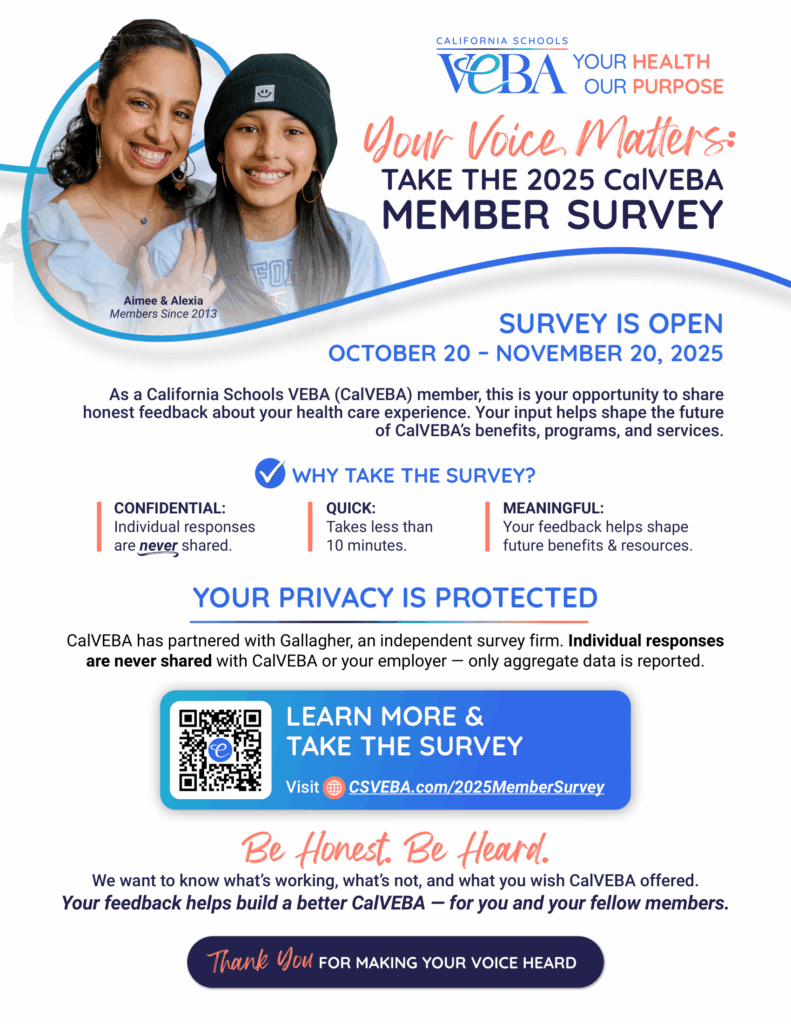
2025 CalVEBA Member Survey
The CalVEBA Member Survey Is Now Open—Your Voice Is Confidential and Powerful
The 2025 CalVEBA Member Survey is now live! Please take a few minutes to share your feedback. Your responses are completely confidential and will help shape the future of your benefits and support services.
When you and your fellow CalVEBA members participate, your collective voice guides the decisions made by your peers on the CalVEBA Board. Together, we can make a real difference.
How we keep your feedback confidential: The survey is managed by an independent firm, and CalVEBA only receives anonymous, aggregated results. No one at CalVEBA or your workplace will see your individual answers.
Access the survey at csveba.com/MemberSurvey
Educator Homebuyer & Equity Workshop
Two options are available for this workshop:
????In person: Tuesday, October 28, 2025 from 4:00 - 6:00 PM at the SDEA Office
???? Virtual: Wednesday, October 29, 2025 from 5:00 - 7:00 PM via Zoom (Click here for the Zoom Link)